Full-Grain Leather: Why Imperfection Is the Real Quality Signal
10 min read
The Bag That Photographs Best Isn't Always the Best Bag
What "Full-Grain Leather" Actually Means
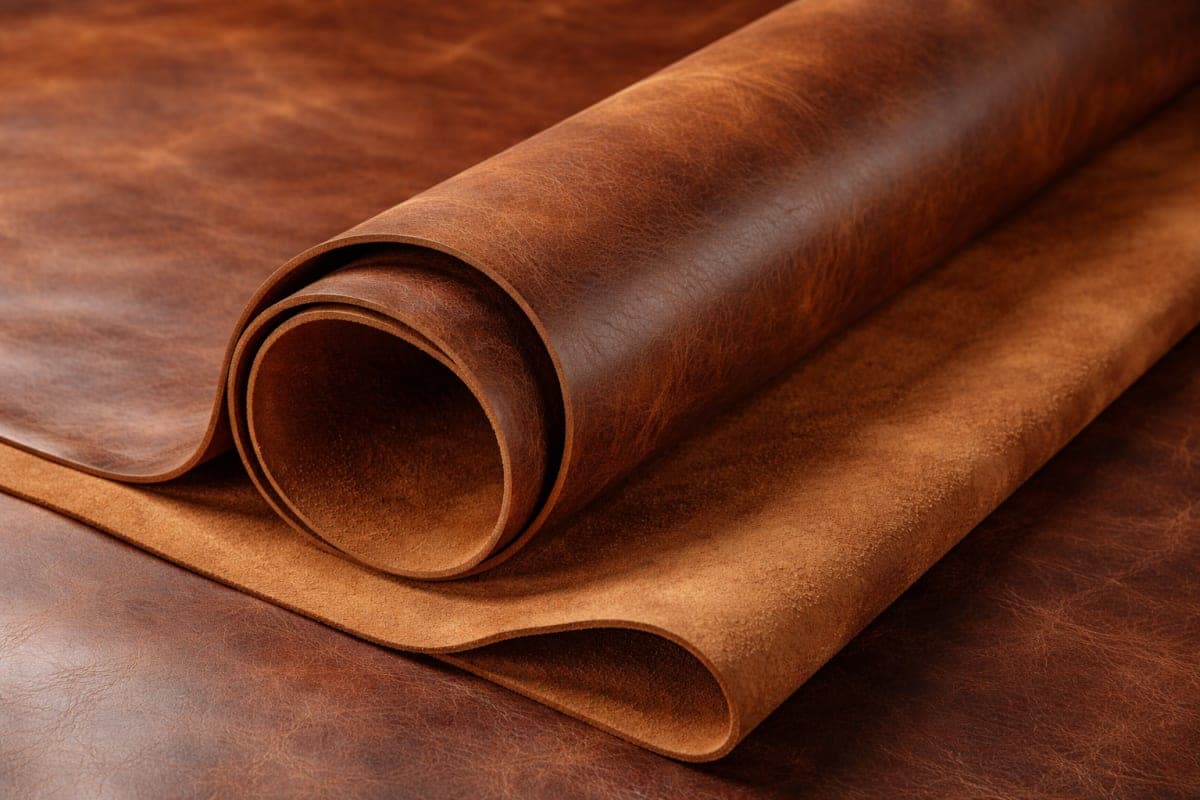
Leather comes from animal hide. That hide has layers. The outermost layer — shaped by years of weather, movement, and life — is the densest, most tightly woven part of the structure. It's called the grain. Full-grain leather uses this surface exactly as it is. No sanding. No buffing. No embossed pattern applied on top to simulate what was removed.
This means full-grain leather carries the natural marks of the animal it came from. Subtle variation in texture. Slight inconsistencies in the grain pattern. The occasional small marking that didn't buff away — because nothing was buffed at all.
To an untrained eye, this can look imperfect. It is. And that's the entire point.
Why Imperfection Is a Quality Signal in Full-Grain Leather
Corrected leather is processed to look consistent. The natural surface is sanded down, then an embossed pattern is applied to mimic the grain that was removed. A finish coat seals it. The result looks uniform. Controlled. Pristine at point of sale.
But here's what the correction removes along with the imperfections: density, breathability, and the natural fiber structure that makes leather strong and responsive to use.
Full-grain leather keeps all of that intact. The same surface that looks slightly imperfect at checkout is the surface that:
Corrected leather ages like a performance. Full-grain leather ages like a life.
How to Tell Full-Grain from Corrected Leather: The Visual Test
In a retail environment, under warm artificial lighting, the difference between full-grain and corrected leather is genuinely difficult to spot. Both can look expensive. Both can feel smooth. Natural light tells a different story.
Full-grain leather in natural light shows variation. The grain shifts slightly as you move it. It doesn't repeat. There's depth to the surface — not gloss, but a quiet, dimensional quality that signals the original material is intact.
Corrected leather, in natural light, often reveals the embossed pattern repeating. The surface is uniform in a way that natural hide never quite is. And the finish coat creates a particular kind of sheen — bright rather than deep.
The test is simple:
Look for repetition. Natural grain doesn't repeat. Printed grain does.
What the Premium Price of Full-Grain Leather Is Actually For
Full-grain leather costs more to source and more to work with. The hides must be carefully selected because the surface is on display — there's no correction step to hide flaws that fall below quality threshold.
When you pay a premium for full-grain, you're paying for:
The surface
A natural grain took years to develop. It cannot be manufactured or replicated.
Structural integrity
The dense fibre structure of the untouched grain provides significantly more tensile strength than sanded hide.
Longevity
A corrected leather bag may look impressive for 18 months. A full-grain leather bag used daily will look better in year seven than it did at purchase.
The right to patina
Only an open, uncoated surface can absorb use and develop the character that makes a leather piece genuinely irreplaceable.
Why Roccope Only Works With Full-Grain Leather
At Roccope, we don't correct our leather. We don't sand away the surface to achieve the kind of uniformity that photographs well in a product listing. We work with full-grain hides because they're the only material that tells the truth over time. Because the marks on the surface aren't defects to hide — they're the beginning of the story the piece will carry.
A Roccope bag won't look flawless on day one. It will look honest. And in five years of daily use, it will look like yours — specifically, irreducibly, unmistakably yours.
That's not an imperfection. That's the whole design.